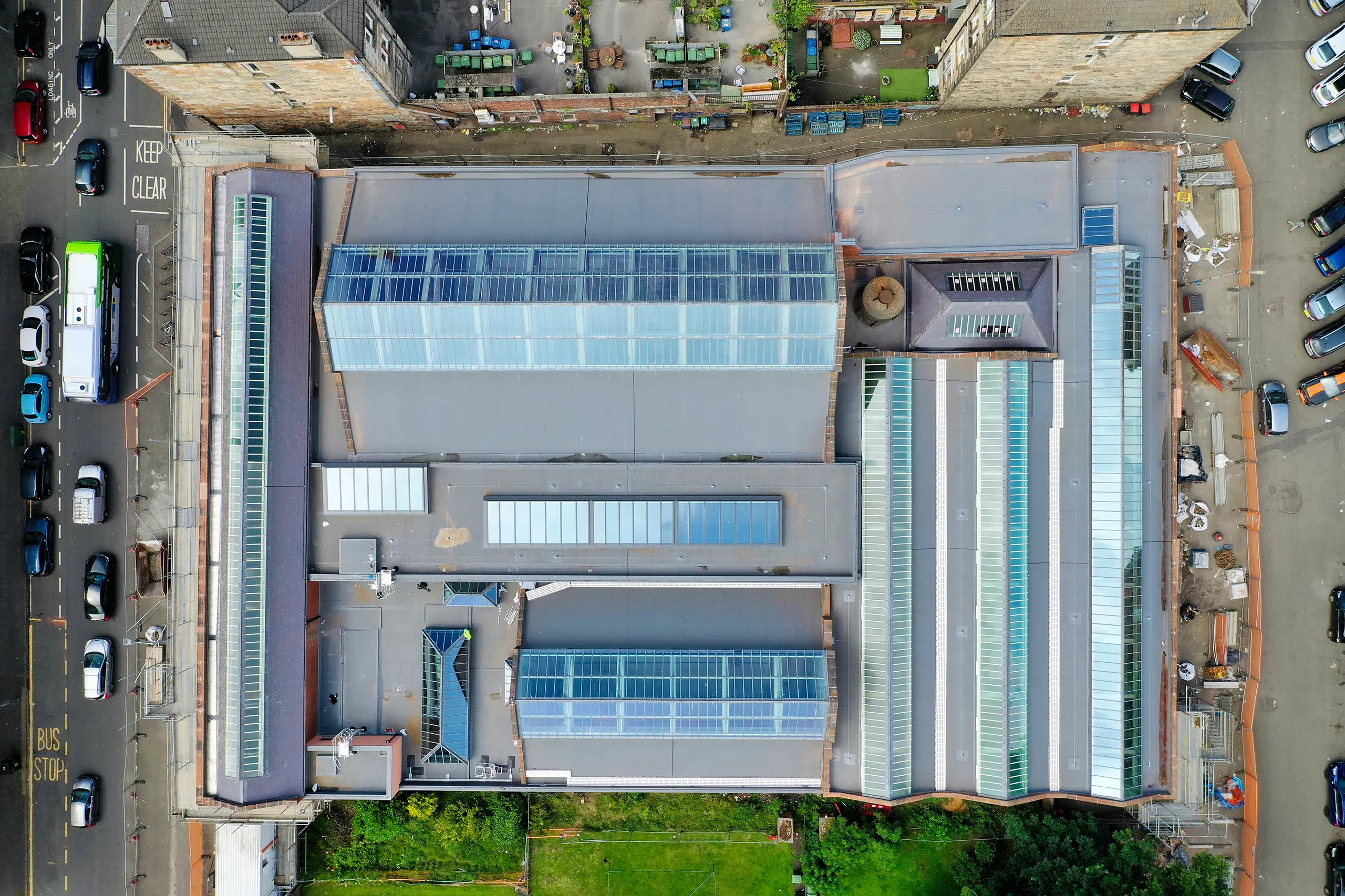
Various techniques are available to control the levels of solar heat gain passing through roof glazing, the most common being the use of solar control glass.
Solar Control Glass Guide
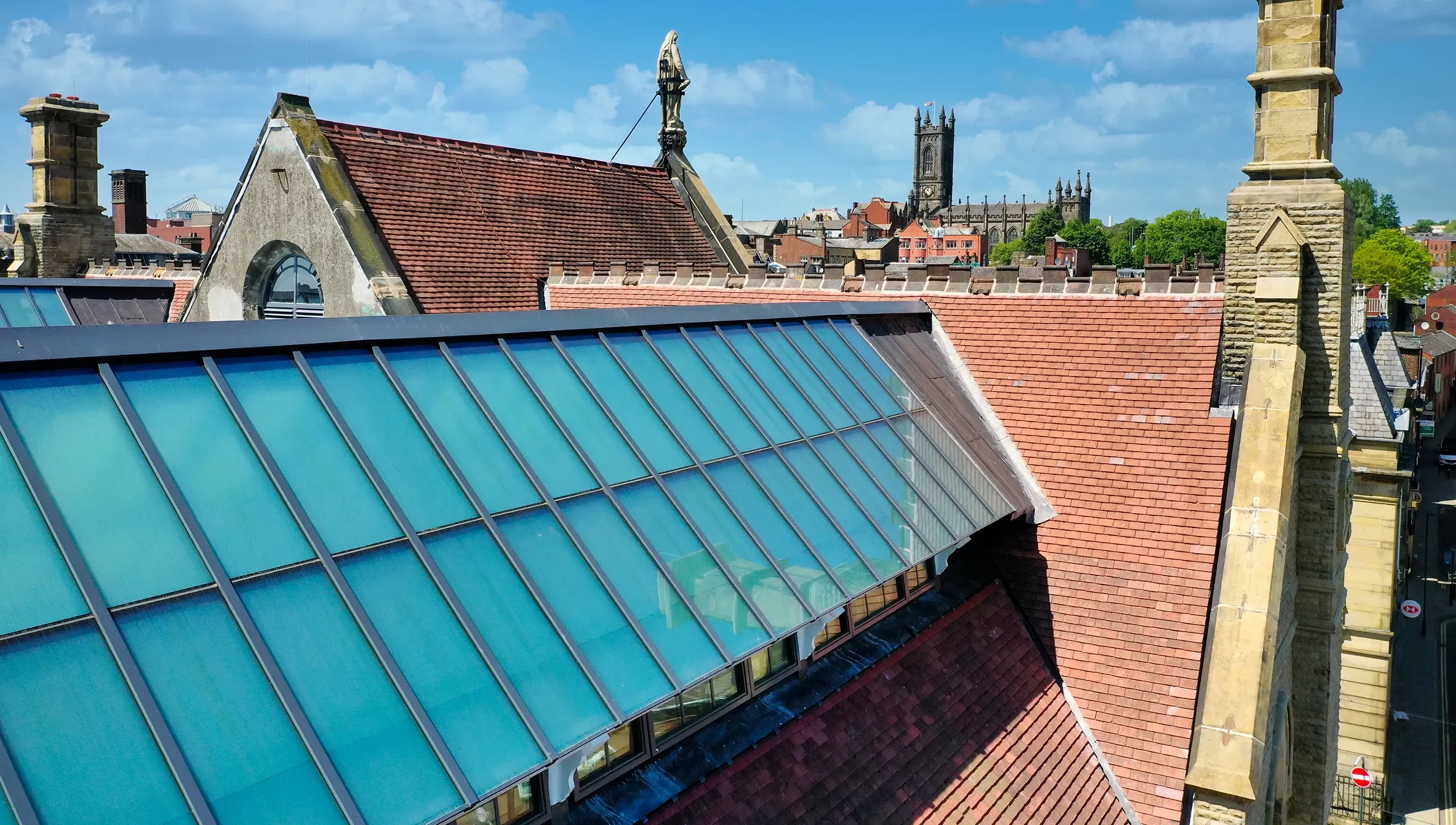
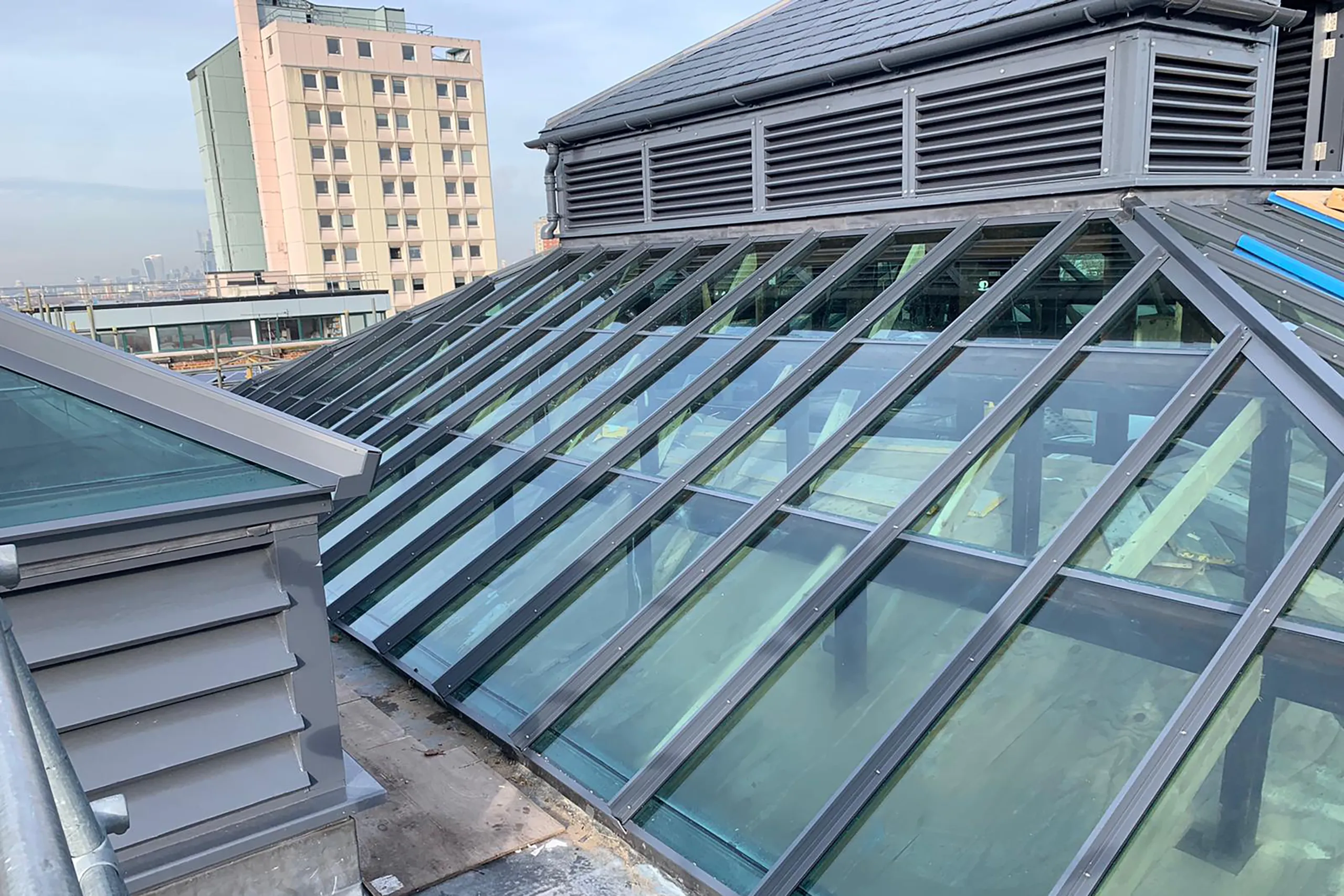
In addition to admitting light, our roof glazing systems also allow the natural heat from the sun to enter a building.
During the winter this can be considered a benefit – offsetting heating costs by providing ‘free’ heat on sunny days during the winter season.
During the summer months, however, unless some form of solar control is considered, this heat from the sun could be regarded as a disadvantage and lead to overheating issues.
There are several solar control glass types available with a large selection of performance levels allowing different amounts of light and heat transmission through the materials. This is achieved by using body tinted glass or special reflective coatings.
Basic Principles
Glass resists solar radiation from the sun by three mechanisms, reflection, transmission and absorption, which for solar control purposes are defined in terms of the following parameters:
Reflectance:
The proportion of solar radiation at near normal incidence which is reflected by the glass back into the atmosphere.
Absorptance:
The proportion of solar radiation at near normal incidence which is absorbed by the glass.
Direct Transmittance:
The proportion of solar radiation at near normal incidence which is transmitted directly through the glass.
Total Transmittance:
The fraction of solar radiation at near normal incidence that is transferred through the glazing by all means. It is composed of the direct transmittance, also known as the short wave component, and the part of the absorptance dissipated inwards by long wave radiation and convection, known as the long wave component. The proportions of the absorbed energy which are dissipated either inside or outside depend on the glazing configuration and the external exposure conditions. All solar radiant heat properties are angle dependent.
Shading Coefficient:
The solar radiant heat admission properties of glasses can be compared by their shading coefficients. The shading coefficient is derived by comparing the properties of any glass with a clear float glass having a total solar heat transmittance of 0.87 (such a glass would be between 3 and 4mm). It comprises a short wavelength and long wavelength shading coefficient.
Solar Control For Glass
Solar control can be achieved by the use of:
- Body tinted glasses with increased absorption.
- Reflective coated glasses with increased reflection.
- Combinations of body tinted and reflective coatings in a single glass
- Special high performance insulating glass units.
Body Tinted Glass
These types of glass are usually tinted grey, green, bronze or blue throughout their thickness. Their solar control properties and colour vary with thickness whilst their reflectance are slightly less than clear float. When used in double glazed units they are best positioned as the outer pane as the heat due to the absorbed radiation is more easily dissipated to the outside of the building.
Coated Glass
Solar Control can be increased by the use of coated glass which:
- Reduce solar heat gains with a full range of high, medium and low performance options offer a choice of high to low light transmittances.
- Provide varying degrees of reflectance including low reflectance.
- Are available in a wide range of colours and appearances to meet aesthetic design requirements.
- Are available as toughened or laminated options for safety and security.
- Offer a comprehensive range of solar control performance options. The numerous coating compositions available provide a wide range of performances, which is further increased by their combination with body tinted glasses. Thus, glass with a particular performance may be selected for specific applications.

Design
The design and specification of glazing demand that several (often conflicting) requirements need to be met and it is impossible to consider any one in isolation. However, when considering the use of solar control glass, it is necessary to consider the location and orientation of the glazing within the building envelope.
Temperate Glass
Glass performance in temperate climates has to balance the need to provide solar control and reduce summertime overheating against the need to provide high levels of natural illumination and the benefits of passive solar heating. To allow for passive solar design, the performance range for a double glazed unit configuration could be:
- Total transmission 20% to 70%
- Light transmission 35% to 90%
- U value 1.0 to 1.2 W/m² K
These performance parameters for glass need relating to the specific application, since there is no one ideal glazing solution for all applications. However, as a general principle, high thermal insulation with solar control is a usual requirement for temperate climates such as the UK.
Solar Gains
Solar radiation through glass causes the air temperature in a room to rise and it is the task of the designer to ensure that this rise in temperature does not cause discomfort to building occupiers by providing appropriate heating, cooling and ventilation schemes to provide comfortable conditions. To this end, the designer will have to undertake calculations to assess the effect of various glazing options on the solar heat gains that his ventilation or air conditioning equipment need to cope with, and to choose the best solution for the specific project. Solar gain is not the only source of heat which contributes to the ‘total heat’ within a building. Other sources include lighting, occupants themselves, electrical equipment etc.
Solar gains into a building can be determined from a knowledge of the following:
- The position of the sun in relation to each elevation of the building. Levels of solar radiation are dependent upon whether or not the sun is relatively high in the sky and the orientation relative to the glazing.
- The intensity of the solar radiation incident upon the faces of the building.
- The surface areas exposed to the sun. A large glazed area will allow more solar gains to enter a building than smaller areas of glazing.
- The date and time of day. This is related to the relative movements of the sun and earth. Shading effects. Presence of blinds, overhangs, nearby buildings etc, may prevent solar radiation entering a building.
- Type of glass. Different glasses will transmit, reflect and absorb different proportions of the sun’s energy.
- Structure of the building. A building constructed of heavyweight materials will heat up and cool down more slowly than one made with lightweight materials.
Direct Radiation and Comfort
Whilst air conditioning can provide comfortable conditions for the building and occupants as a whole, the effect of solar radiation falling directly on people situated close to the glazing needs to be treated separately. An occupant receiving direct solar radiation can feel uncomfortably hot even when room temperatures are being maintained at a comfortable level by means of air conditioning or mechanical ventilation. As a general guide, highly reflective glasses with relatively low direct solar transmittances will be most effective at combating the localised overheating of occupants situated under the glass.